
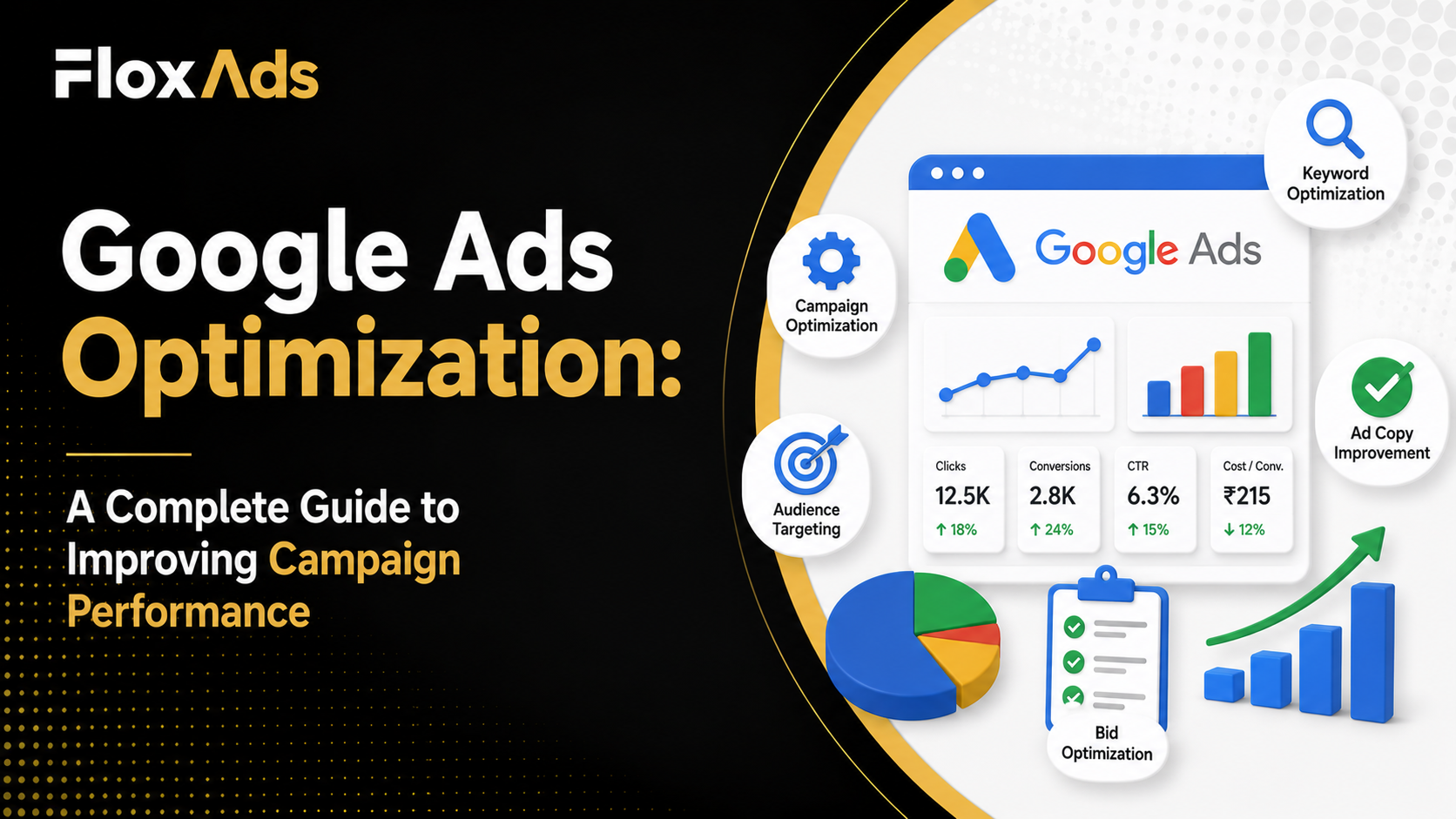
Running a campaign is only the first step — real results come from consistent Google Ads optimization. Many businesses launch campaigns and leave them running without regular adjustments, missing significant opportunities to improve performance and reduce wasted spend. This guide walks through the key strategies businesses can use to optimize their Google Ads campaigns effectively.
Why Optimization Matters
Google Ads runs on a dynamic, auction-based system where competition, user behavior, and search trends constantly shift. A campaign that performs well today might underperform next month if left unattended. Regular optimization helps businesses adapt to these changes, maintain strong quality score, and continue improving results over time.
Without ongoing optimization, businesses often overspend on underperforming keywords while missing opportunities to invest more in high-converting areas. Treating optimization as a continuous process, rather than a one-time setup, makes the biggest difference in long-term performance.
Improving Keyword Selection
Keyword strategy forms the foundation of any successful campaign. Reviewing search term reports regularly helps identify which queries actually trigger ads, revealing both valuable new keyword opportunities and irrelevant searches wasting budget.
Adding negative keywords prevents ads from showing for unrelated searches, immediately improving efficiency. Businesses should also focus on long-tail keywords, which typically have lower competition and higher purchase intent compared to broad, highly competitive terms.
Refining Ad Copy for Better Performance
Ad copy directly influences click-through rate, which in turn affects quality score and overall cost efficiency. Testing multiple headline and description variations helps identify which messaging resonates most with the target audience.
Including relevant keywords naturally within ad copy improves relevance, while a clear, specific call-to-action encourages users to click. Highlighting unique benefits, promotions, or offers also helps ads stand out against competitor listings in crowded search results.
Optimizing Landing Pages
Even a perfectly optimized ad fails to deliver results if the landing page doesn't match user expectations. Landing pages should load quickly, work well on mobile devices, and clearly align with the ad's messaging and offer.
A strong conversion rate optimization approach focuses on removing friction — simplifying forms, reducing distractions, and placing clear calls-to-action above the fold. Google also factors landing page experience into quality score, meaning better pages directly reduce cost per click.
Adjusting Bidding Strategies
Bidding strategy significantly affects both cost and performance. Businesses new to Google Ads often start with manual bidding to maintain tighter control over costs, then transition to automated strategies like target CPA or target ROAS once enough conversion data accumulates.
Automated bidding uses machine learning to adjust bids in real time based on the likelihood of conversion, often improving return on investment compared to static manual bids. However, automated strategies work best with sufficient historical data, so businesses should allow enough time before judging performance.
Using Ad Extensions Effectively
Ad extensions provide additional information and increase the visible space an ad occupies on the search results page. Sitelink extensions, callout extensions, and structured snippets all improve ad visibility while giving users more reasons to click.
Extensions also tend to improve click-through rate without additional cost, since Google doesn't charge extra for including them. Regularly reviewing and updating extensions ensures they stay relevant to current promotions or business offerings.
Leveraging Audience Targeting
Combining keyword targeting with audience layers adds another dimension to optimization. Remarketing audiences allow businesses to show ads specifically to users who previously visited their website, often resulting in significantly higher conversion rate compared to reaching cold audiences.
In-market and affinity audiences help refine targeting further, ensuring ads reach users who show relevant interests or purchase intent. Layering these audiences over existing campaigns, rather than replacing keyword targeting entirely, usually delivers the strongest results.
Monitoring Key Performance Metrics
Effective optimization depends on tracking the right data. Click-through rate, conversion rate, cost per click, and quality score all provide valuable insight into campaign health. Reviewing these metrics regularly helps identify which keywords, ads, or audience segments deserve more budget and which need adjustment or pausing.
Google Ads provides detailed reporting tools, including device performance, time-of-day trends, and geographic breakdowns. Analyzing this data helps businesses understand exactly where their budget performs best and where adjustments can improve overall campaign performance.
Testing and Iterating Continuously
Optimization works best as an ongoing cycle rather than a single adjustment. Running structured A/B testing on ad copy, landing pages, and bidding strategies helps businesses make data-driven decisions instead of relying on assumptions.
Testing one variable at a time produces clearer insights, since multiple simultaneous changes make it difficult to identify which adjustment actually caused a performance shift. Over time, this disciplined testing approach builds a strong foundation for consistent improvement.
Avoiding Common Optimization Mistakes
Many businesses make avoidable mistakes when optimizing campaigns. Making too many changes at once often makes it difficult to identify what actually improved or hurt performance. Ignoring mobile performance also limits results, since a large portion of search traffic now comes from mobile devices.
Failing to review search term reports regularly leads to wasted spend on irrelevant queries. Similarly, setting automated bidding strategies too early, before gathering enough conversion data, can produce inconsistent or unpredictable results.
Conclusion
Google Ads optimization requires ongoing attention across keywords, ad copy, landing pages, bidding, and audience targeting. Businesses that treat optimization as a continuous process, rather than a one-time task, consistently achieve better results and lower costs over time. By reviewing performance data regularly, testing systematically, and making informed adjustments, any business can significantly improve the effectiveness of its Google Ads campaigns.