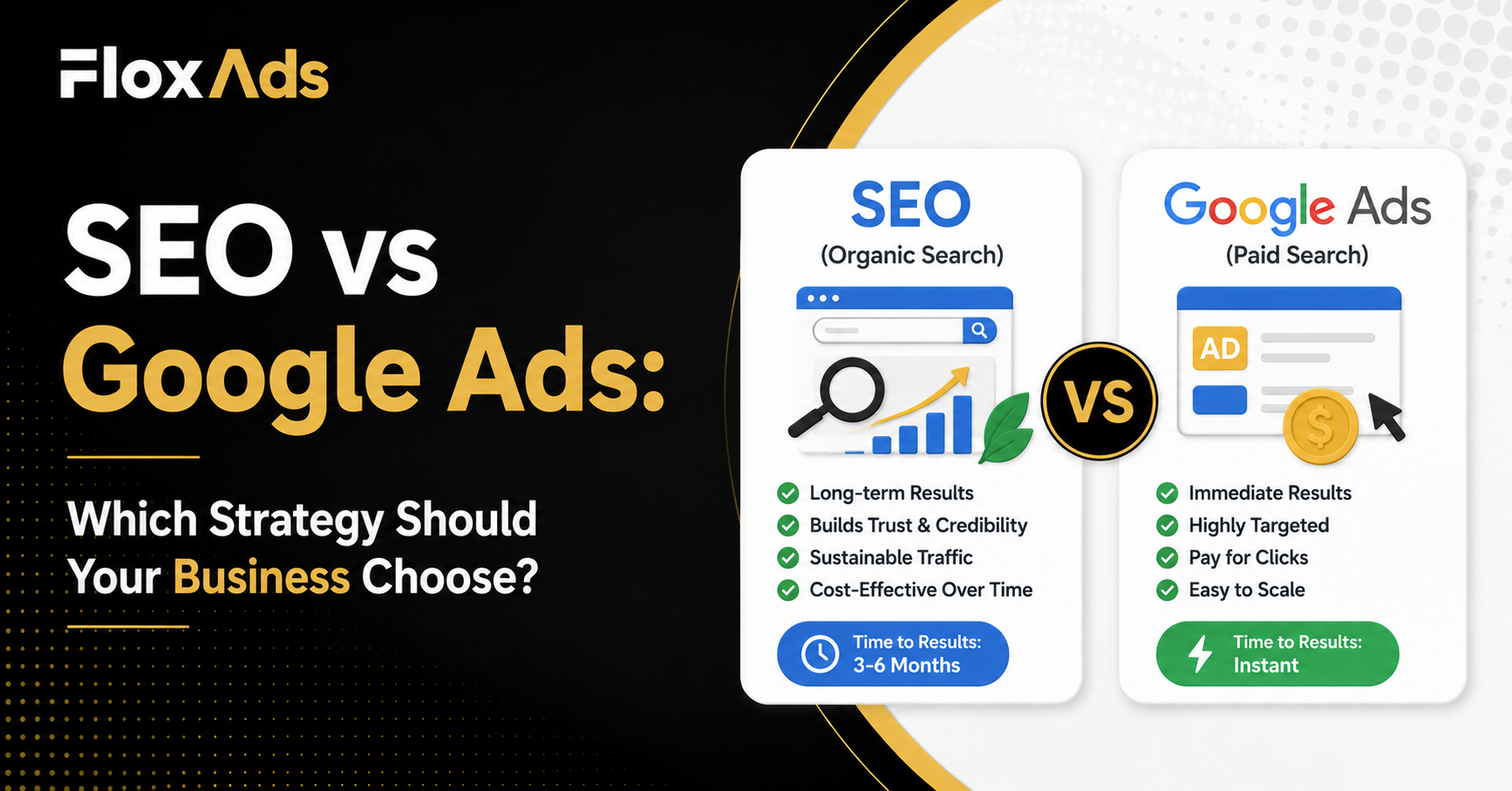
Every business trying to grow online eventually faces the same question — should marketing budget go toward SEO or Google Ads? Both strategies help businesses appear in search results, but they work in completely different ways, deliver results on different timelines, and suit different business goals. This article compares both approaches in detail to help you decide which one fits your business better.
What Is SEO?
Search engine optimization refers to the process of improving a website so it ranks higher in organic, unpaid search results. This involves optimizing content, improving site structure, building backlinks, and ensuring the website loads quickly and works well on mobile devices.
Unlike paid advertising, SEO doesn't involve paying for clicks or impressions. Instead, it focuses on earning visibility through relevance, quality content, and technical optimization. Because of this, SEO often takes longer to show results, but the traffic it generates tends to be sustainable over time.
What Is Google Ads?
Google Ads, on the other hand, allows businesses to pay for immediate visibility at the top of search results. Advertisers bid on keywords, and Google displays ads based on bid amount combined with quality score, which measures ad relevance and expected performance.
This model delivers instant traffic, since ads appear as soon as a campaign launches. However, this visibility lasts only as long as the campaign remains active and funded — once the budget runs out, the traffic stops immediately.
Speed of Results
One of the biggest differences between these two approaches involves timing. Google Ads delivers immediate results, often generating clicks and conversions within hours of launching a campaign. This makes it ideal for businesses that need quick visibility, such as those running time-sensitive promotions or launching a new product.
SEO takes considerably longer to show meaningful results. Building organic traffic requires consistent effort over several months, since search engines need time to crawl, index, and rank new or improved content. Businesses focused on long-term growth often find this patience worthwhile, since organic rankings tend to remain stable once achieved.
Cost Comparison
Google Ads requires ongoing investment, since traffic stops the moment spending stops. Businesses pay for every click, and costs can add up quickly in competitive industries. This makes Google Ads a recurring expense rather than a one-time investment.
SEO, while not entirely free, generally involves a different cost structure. Businesses invest in content creation, technical improvements, and sometimes professional SEO services, but this investment can continue generating traffic long after the initial work gets completed. Over time, cost per click for organic traffic effectively decreases, since the same optimized content keeps attracting visitors without ongoing ad spend.
Trust and Credibility
Many users trust organic search results more than paid advertisements. Studies consistently show that people click organic listings more often than ads, partly because organic rankings feel more like genuine recommendations rather than paid placements.
This doesn't mean Google Ads lacks credibility — many users still click on well-crafted ads, especially when searching with strong purchase intent. However, businesses looking to build long-term brand authority often find that strong organic rankings contribute more to overall trust and reputation.
Sustainability and Long-Term Value
SEO offers a significant advantage in sustainability. Once a website achieves strong rankings for relevant keywords, it can continue receiving traffic without constant financial input, though ongoing maintenance and content updates remain necessary to maintain those positions.
Google Ads, by contrast, provides no lasting value once campaigns stop. This makes it less suitable as a standalone long-term strategy, though it excels at generating immediate, predictable traffic whenever needed.
Targeting and Control
Google Ads offers precise control over targeting, budget, and timing. Advertisers can adjust campaigns instantly, test different keywords, and pause underperforming ads immediately. This level of control makes Google Ads highly flexible for businesses that need to respond quickly to market changes.
SEO offers less immediate control, since rankings depend on search engine algorithms that change frequently and remain largely outside an advertiser's direct control. However, businesses that consistently follow best practices around content marketing and technical optimization tend to maintain strong rankings despite algorithm updates.
Which Strategy Fits Which Business?
New businesses or those launching time-sensitive campaigns often benefit more from Google Ads, since it delivers immediate visibility while organic rankings are still being built. Businesses in highly competitive industries, where organic ranking takes significant time and effort, may also rely more heavily on paid advertising initially.
Established businesses focused on long-term growth typically benefit more from investing in SEO, especially once they have the resources to create consistent, high-quality content. Service-based businesses and local business marketing efforts often see strong results from SEO, since customers frequently search for nearby services organically.
Using Both Strategies Together
Rather than choosing one over the other, many successful businesses combine SEO and Google Ads into a unified strategy. Google Ads can generate immediate traffic and revenue while SEO efforts build momentum in the background. Once organic rankings improve, businesses can gradually reduce ad spend on certain keywords, redirecting budget toward areas still requiring paid support.
This combined approach helps businesses cover the entire customer journey, capturing both immediate demand through ads and long-term visibility through organic search.
Conclusion
SEO and Google Ads both offer valuable paths to visibility, but they serve different purposes and timelines. Google Ads delivers fast, controllable results ideal for immediate needs, while SEO builds sustainable, long-term traffic that continues delivering value well after the initial effort. The right choice depends on business goals, budget, and how quickly results are needed — and for many businesses, combining both strategies ultimately delivers the strongest overall performance.